Nothing humbles a person quite like spending $347 at the grocery store… and still feeling like there’s “nothing to eat” at home.
If groceries feel more expensive lately, it’s because they are. Food prices have continued to rise, and many families are feeling the pressure every single month.
And honestly? Grocery shopping has always been one of the easiest places for money to leak out of the budget.
Not usually because people are irresponsible. But because life gets busy.
We shop tired.
We grab convenience foods.
We forget what’s already in the freezer.
We buy random ingredients with good intentions.
And suddenly there’s a half bag of spinach liquefying in the produce drawer while we order takeout.
The good news is this: Most families don’t need extreme couponing or a diet made entirely of rice and beans.
They usually just need a better system.
Small Grocery Habits That Save Big Money
First: There’s No “Perfect” Grocery Budget
According to USDA estimates, a family of four may spend anywhere from about $1,000 to over $1,600 a month on groceries depending on location, lifestyle and eating habits.
That’s a huge range.
So if you’ve ever wondered:
“Why does everyone online seem to spend less than we do?”
Remember: Every family is different.
Your grocery budget depends on:
- family size,
- food allergies,
- activity level,
- location,
- cooking habits,
- and financial goals.
The goal is not perfection. The goal is intentionality.
The Real Problem Usually Isn’t One Big Shopping Trip
Here are some little things that add up:
- impulse purchases,
- convenience foods,
- duplicate ingredients,
- food waste,
- random snack runs,
- eating out because there’s no plan,
- and shopping without checking what you already have.
Most people don’t realize how much money disappears this way. Wasted food is wasted money.
I hate to say this… but if you throw away spoiled produce every week, you’re basically putting dollar bills in the refrigerator and tossing them out seven days later.
The Biggest Grocery Mistake? Shopping Without a Plan
People who grocery shop with a plan almost always spend less than people who “wing it.”
Because when you walk into the store without a plan, everything suddenly sounds like a good idea.
A meal plan doesn’t need to be complicated. So, you can relax your shoulders now.
You do NOT need:
- color-coded spreadsheets,
- Pinterest-worthy organization,
- or 17 new recipes every week.
You just need a simple plan for:
- breakfasts,
- lunches,
- dinners,
- and snacks.
That alone cuts down:
- impulse spending,
- forgotten ingredients,
- extra store trips,
- and takeout emergencies.
I can’t emphasize this enough: Shop. With. Purpose.
That one change makes a huge difference.
Before You Grocery Shop, Check Your Kitchen First
You’ve probably heard this before, but this habit alone truly can save a surprising amount of money.
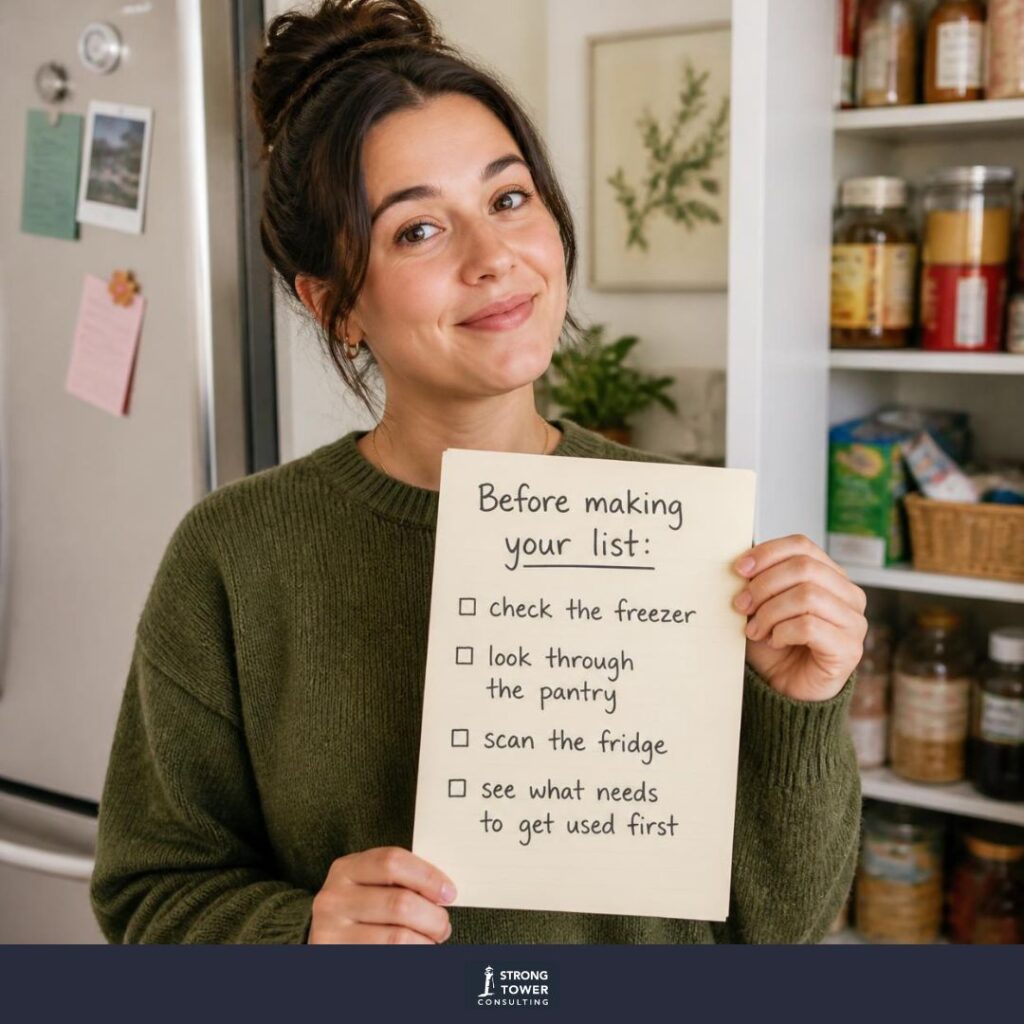
Before making your list:
- check the freezer,
- look through the pantry,
- scan the fridge,
- and see what needs to get used first.
Most households already have food sitting at home that could become meals this week.
That frozen chicken.
The rice in the back of the pantry.
The pasta you forgot you bought.
The vegetables that need rescued before they become a science experiment.
One of the easiest ways to lower grocery spending is simply using what you already paid for.
Convenience Usually Costs More
Pre-cut fruit.
Prepared meals.
Grab-and-go snacks.
Individually packaged everything.
Canned drinks.
Here’s one I’ve been thinking about lately. For instance, we’re going to keep tea and lemonade around this summer. We can even make our own Arnold Palmers. They are a lot cheaper to make at home and taste better too!
Convenience foods save time, but they usually cost significantly more.
Now, sometimes convenience is worth it. Life gets busy, I get it. But many families are paying premium prices for foods they could prep themselves in a few extra minutes.
You don’t have to do everything from scratch to save money.
Even making a few swaps helps:
- shred your own cheese,
- chop your own vegetables,
- cook larger portions,
- or prep lunches at home.
Small habits repeated consistently matter more than dramatic changes that don’t last.
One of the Best Budgeting Tools Is… Repetition
People often think meal planning means making brand-new meals every night.
That’s exhausting.
And expensive.
Instead, coordinate meals around ingredients you already have.
For example:
- taco meat one night,
- taco bowls the next,
- quesadillas after that.
Or roast extra chicken and use it multiple ways throughout the week. This lowers wasted food, stress levels and grocery costs. Win, win, win!
Keeping things simple doesn’t mean you’re failing. Simple is sustainable.
Give Your Grocery Budget a Job
A grocery budget should support your bigger financial goals.
If you’re:
- paying off debt,
- rebuilding savings,
- or trying to create breathing room,
then groceries are one of the best categories to improve.
Not through guilt.
Not through restriction.
But through awareness and intention.
It happens little by little.
An extra stop here.
A few impulse buys there.
Another takeout night because nothing was planned.
If you’re looking for more ways to make more margin in your budget, check out the article here. These small decisions matter and add up!
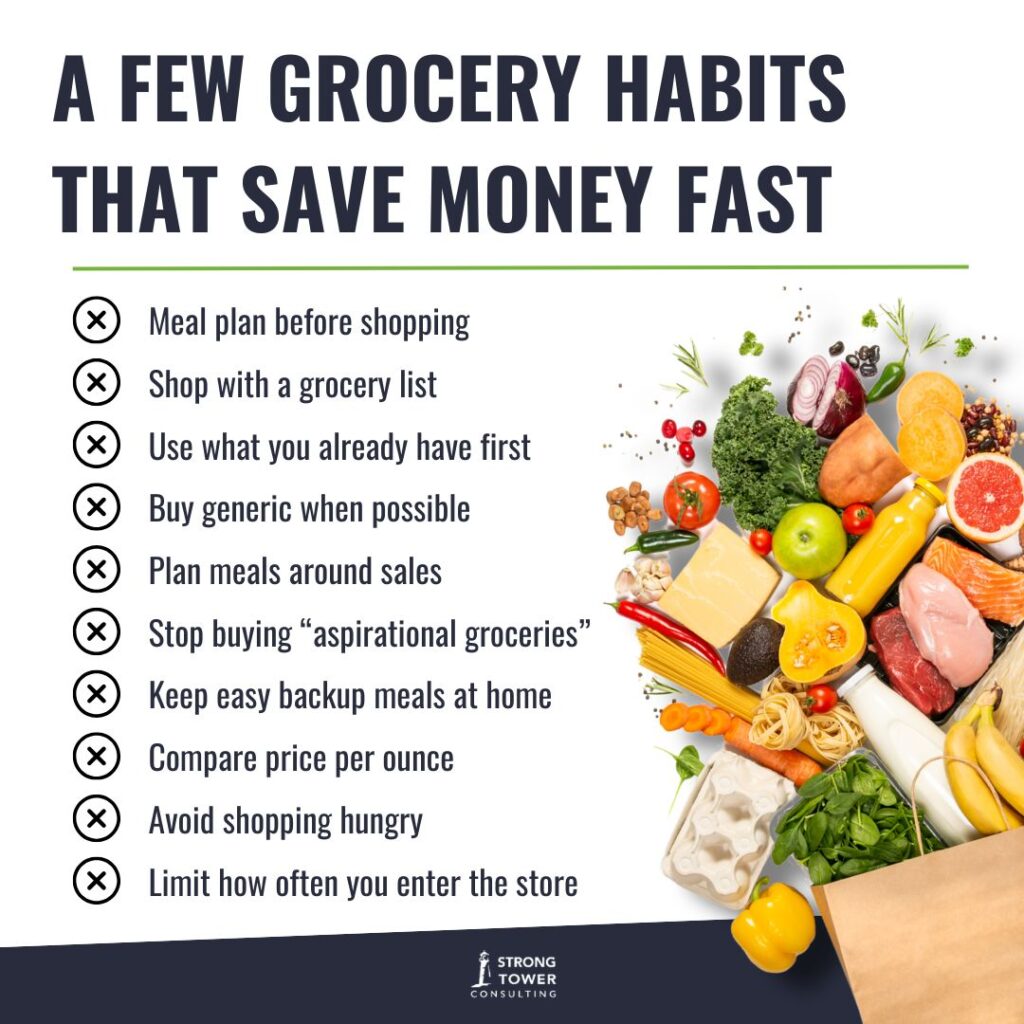
A Few Grocery Habits That Save Money Fast
Here are a few practical habits that make a real difference:
- Meal plan before shopping
- Shop with a grocery list
- Use what you already have first
- Buy generic when possible
- Plan meals around sales
- Stop buying “aspirational groceries”
- Keep easy backup meals at home
- Compare price per ounce
- Avoid shopping hungry
- Limit how often you enter the store
You do not need to do all of them perfectly.
Even one or two changes can free up noticeable room in your budget.
This Week’s Challenge
Before your next grocery trip:
- Check your pantry, freezer and fridge first.
- Plan just 3–4 simple dinners.
- Make a grocery list based only on those meals.
- Stick to the list.
That’s it.
Simple beats complicated almost every time.
Because the goal isn’t to become a perfect grocery shopper.
It’s to stop feeling like all your money disappears every time you walk into the store.
Money Stress Usually Isn’t Just About Groceries
Most people don’t need more guilt about money.
They need:
- a plan,
- a system,
- accountability,
- and someone to help them simplify the chaos.
That’s why I’m so passionate about helping families get organized with money in a way that actually works in real life.
Because financial freedom rarely comes from one giant decision.
It usually comes from small, consistent habits repeated over time.
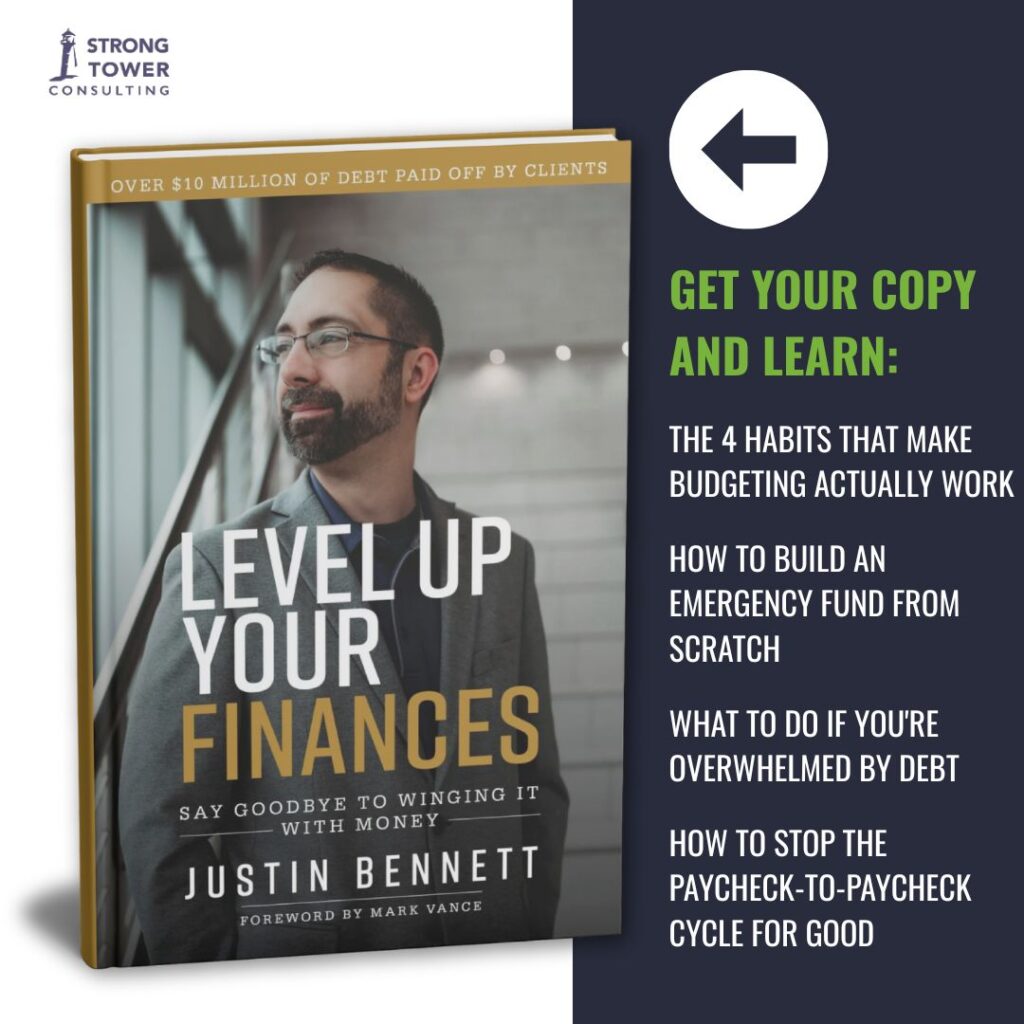
If you’re tired of feeling reactive with money and want a simple plan for your finances, my book, Level Up Your Finances: Say Goodbye to Winging It With Money, was written to help you stop feeling overwhelmed and start feeling confident with your money again.
And if you want more personalized help, financial coaching may be the next right step.
You don’t have to figure it all out alone.