Money is often not the problem. But it reveals problems.
You had a long day. You don’t feel like cooking, so you order takeout. Maybe you’ve been working hard, so you buy the thing you’ve had your eye on. Maybe the kids have been going nonstop, so you say yes to an expensive activity because you want them to have the end to a great summer. Or maybe you’ve had a rough week, and a little online shopping feels like something you deserve.
None of these purchases are automatically bad. But here’s an interesting question:
What were you really buying?
The takeout may have bought you convenience. The new purchase may have bought you excitement. The kids’ activity may have bought you a feeling that you’re being a good parent. Online shopping may have bought you temporary relief.
We like to think we’re spending money to buy things. But often, we’re buying something much deeper.
We’re Not Just Buying Things
Think about the last purchase you made that you didn’t really need. Maybe it was a $7 coffee, dinner at a restaurant when you had food at home, something you added to your Amazon cart late at night, or a new outfit, weekend away, or upgrade you didn’t really need.
The question isn’t whether the purchase was worth $7, $70, or $700. Ask yourself:
What did I want that purchase to give me?
Sometimes the answer is obvious. You wanted the coffee. But sometimes the coffee was really about getting ten minutes to yourself. The restaurant was about not having one more responsibility at the end of a long day. The shopping was about feeling better. The vacation was about escaping the routine. The expensive car was about feeling successful.
The purchase isn’t always about the thing. It’s about what we believe the thing will do for us.
And this is one reason managing money can be so difficult. You aren’t just managing dollars. You’re managing emotions, habits, expectations, relationships, and the life you’re trying to build.
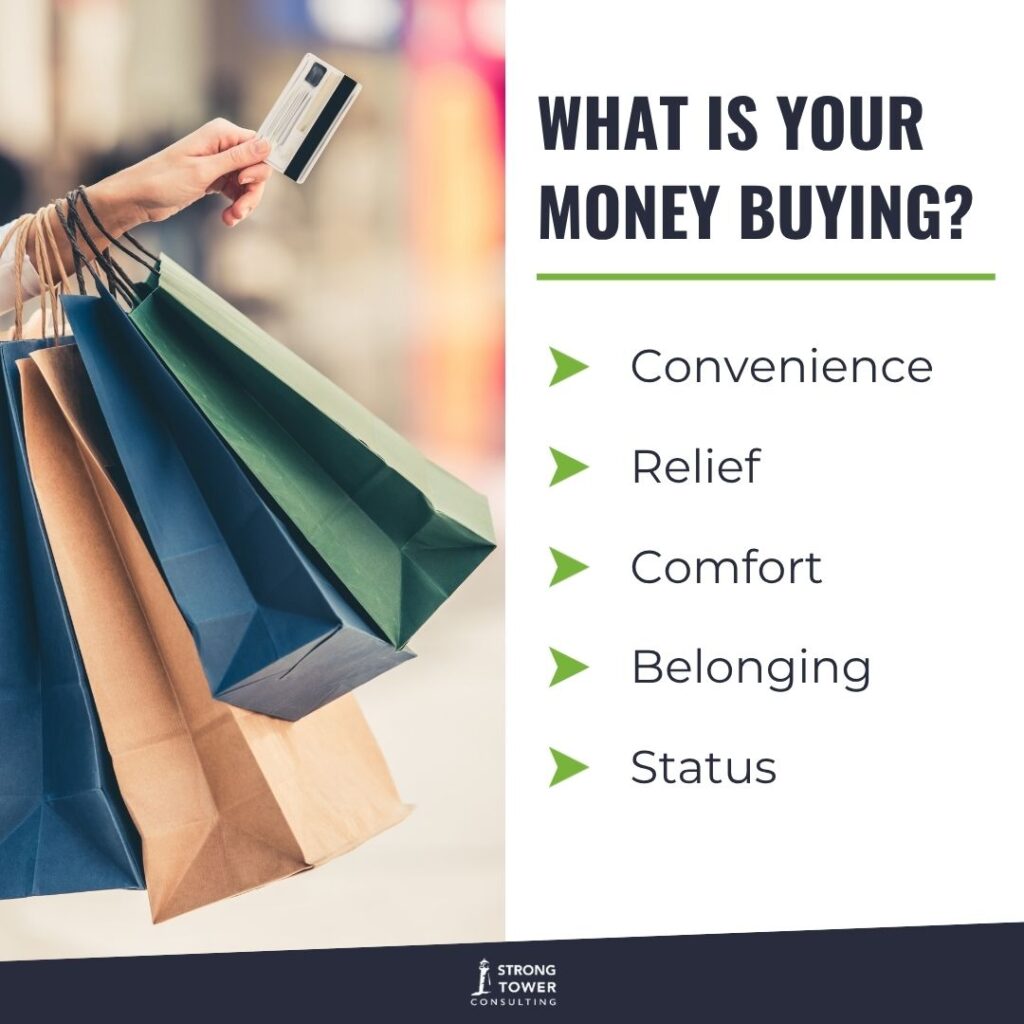
What Is Your Money Buying?
Our spending can meet all kinds of needs.
Convenience
Sometimes we’re buying time.
Grocery delivery, takeout, Amazon Prime, a cleaner, or paying someone to do a job we could do ourselves can all be perfectly reasonable uses of money. Convenience isn’t bad.
But sometimes our spending is telling us something: I’m overwhelmed.
If you’re constantly spending money because you don’t have the energy to do anything yourself, the problem may not be that you’re irresponsible with money. You may simply have too much on your plate.
Relief
Sometimes we’re buying a break.
You’ve had a stressful day. You think to yourself that you deserve a treat. You deserve dinner out. You deserve to buy something for yourself. And for a moment, you feel better.
There’s nothing wrong with enjoying your money. But if spending has become your primary way of coping with stress, the purchase may be solving a problem that money can’t actually fix.
The relief wears off. Then the bill arrives. And now you’re dealing with the original stress plus money stress (or even added debt!).
Belonging
Sometimes we’re buying our place in the group.
The vacation everyone else is taking. The clothes everyone seems to be wearing. The house in the neighborhood. The activities your kids’ friends are doing. The restaurant everyone is talking about.
You may not even realize you’re comparing yourself. But somewhere in the back of your mind is the thought: “If I don’t do this, I’ll be left out.”
So you spend. Not necessarily because you want the thing, but because you want to belong.
Comfort
Sometimes we’re buying comfort.
A favorite meal, a new blanket, a few things from the store, a night out, or a little something that makes an ordinary day feel better can all provide comfort.
Again, there’s nothing wrong with comfort. The problem comes when spending becomes the easiest way to make ourselves feel better. Because then every difficult day comes with a price tag.
Status
Sometimes we’re buying a story about ourselves.
The car. The house. The clothes. The vacation. The newest phone.
We may tell ourselves we simply like nice things. And maybe we do. But sometimes there’s another question underneath:
What do I want this purchase to say about me?
Successful? Responsible? Important? Successful enough?
There is nothing wrong with enjoying nice things. But when our spending becomes a way to prove our worth, we’ll never feel like we have enough. There’s always someone with a newer car, bigger house, better vacation, or nicer kitchen.
A Break From Being Responsible
This one might be the most familiar.
You work hard. You budget. You pay the bills. You take care of everyone else. And eventually you think, “I just want to spend some money without thinking about it.”
So you do.
The purchase becomes a tiny rebellion against responsibility. (Believe me, being financially responsible can be boring, but it’s peaceful.)
And sometimes that’s exactly why the budget fails. Not because you don’t know how to budget, but because the budget has become so restrictive that you eventually want to escape it.
Money Is Often Not the Problem
This is where things get interesting.
The problem isn’t always the $60 dinner. Sometimes the dinner is revealing something else.
You’re exhausted. You’re overwhelmed. You’re trying to keep up. You don’t know how to say no. You haven’t made room for fun in your budget. You’re lonely. You’re stressed. You’re rewarding yourself. You’re trying to feel successful. You’re trying to make your family’s life special.
Money is often not the problem. But it reveals problems.
That’s why simply telling someone to “spend less” doesn’t always work. You’re not just asking them to stop buying something. You’re asking them to find another way to meet whatever need that purchase was meeting.
And that requires a little more honesty than simply cutting expenses.
This is where I go deeper with my coaching.
We don’t just look at the numbers and tell you where you need to cut back. We look at what’s happening underneath the numbers.
What triggers your spending? What beliefs are influencing your decisions? What patterns keep showing up? What are you trying to accomplish with your money, and where is your current behavior getting in the way?
You don’t need someone to make you feel worse about the choices you’ve already made. You need someone who can help you understand what’s happening, see the patterns you may not be able to see on your own, and help you make different decisions moving forward.
Get Curious About Your Spending
The next time you make a purchase you’re not sure about, don’t immediately shame yourself. Get curious.
Ask yourself: What was I feeling before I bought this? What problem was I trying to solve? What did I hope this purchase would give me? Was I buying the thing – or the feeling? Did the purchase actually give me what I wanted?
You may start noticing patterns.
Maybe you spend more when you’re tired. Maybe you shop when you’re stressed. Maybe you spend more when you’re around certain friends. Maybe you spend when you feel like you’re missing out. Maybe you spend because you haven’t given yourself permission to enjoy the money you’ve worked hard to earn.
Those patterns matter.
Because once you can see them, you can start making different choices.
Sometimes the Answer Isn’t to Spend Less
This might sound strange coming from a financial coach, but sometimes the answer isn’t simply to cut the spending.
Imagine you’re constantly ordering takeout. You could tell yourself, “I need to stop eating out.” Or you could ask, “Why am I ordering takeout so often?”
Maybe you’re overscheduled. Maybe you have no easy meals planned. Maybe you’re carrying too much responsibility. Maybe you need to build convenience into your budget intentionally.
The answer might not be never order takeout. It might be, “Let’s figure out how to spend money on convenience without letting convenience run your finances.”
The same thing can happen with fun.
If your budget leaves no room for restaurants, hobbies or spontaneous purchases, eventually you may feel trapped by your own plan. And when you feel trapped, you’re much more likely to abandon it.
Good money management isn’t about squeezing every possible dollar out of your life. It’s about making intentional decisions about what deserves your money.
Your Spending Tells a Story
Your bank account is more than a list of transactions. It’s a record of your choices. And sometimes those choices tell you things you didn’t realize about yourself.
They can reveal what you value, what you fear, what you’re avoiding, what you’re trying to prove, where you’re overwhelmed, where you’re trying to find relief, and where you’re saying yes when you really want to say no.
They can also reveal where your money isn’t actually supporting the life you say you want.
That doesn’t mean your spending makes you a bad person. It means your spending can teach you something.
Your budget can be more than a “restriction”. It can be a mirror.
And once you understand what your money is really doing for you, you can start making decisions with greater intention. Not because you suddenly became perfect with money, but because you understand yourself better.
Spend Money on What Matters
You don’t need to become someone who never spends money. You don’t need to feel guilty every time you enjoy something. And you don’t need to make every financial decision perfectly.
You need to understand why you’re spending and make sure your money is helping you build the life you actually want.
That might mean spending more on convenience in one season of life. It might mean saying no to something you can technically afford because it doesn’t matter enough to you. It might mean putting more money toward a family goal. Or it might mean finally giving yourself permission to enjoy some of the money you’ve worked hard to earn.
The goal isn’t to spend as little as possible. The goal is to spend intentionally on what matters most.
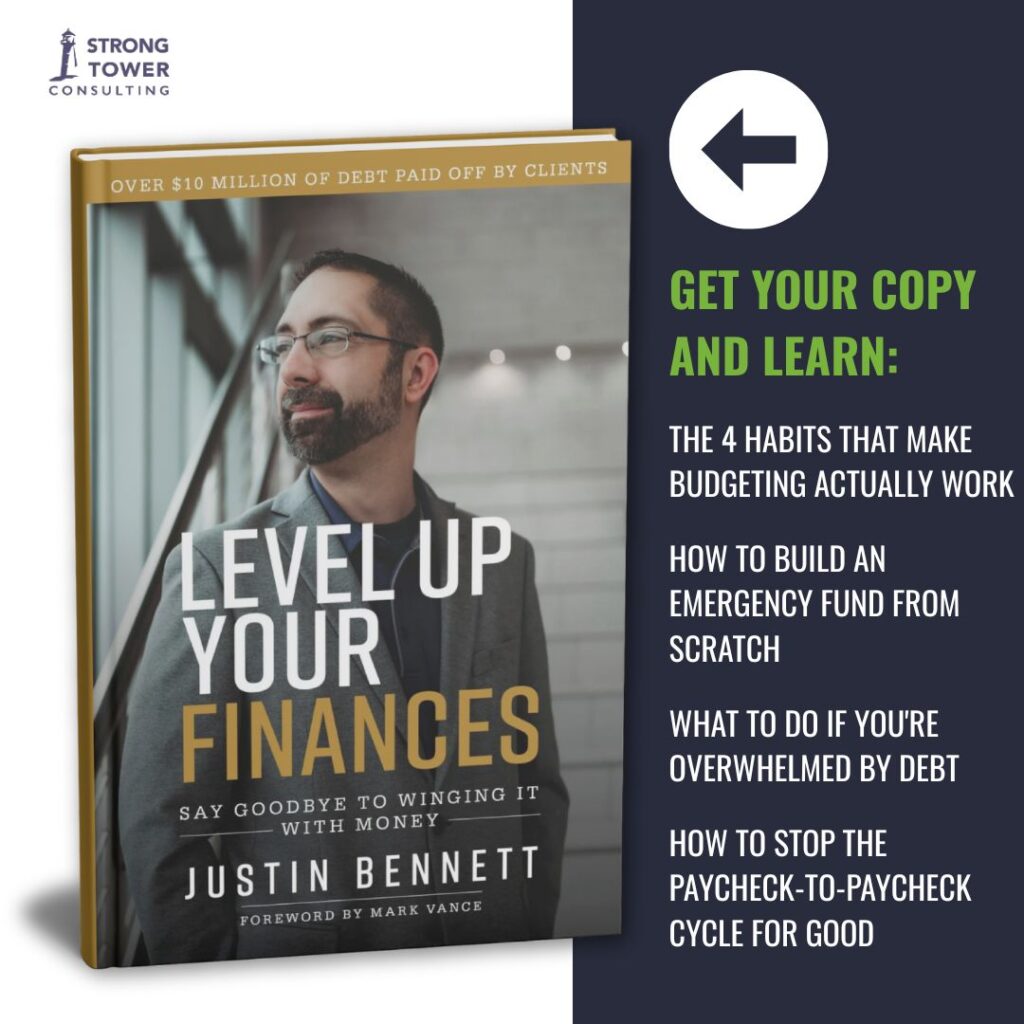
If you’re ready to stop winging it with money and start making intentional decisions that support the life you want, my book, Level Up Your Finances: Say Goodbye to Winging It With Money, can help you build that foundation.
And if you know you need more than a book, if you want someone to help you understand your patterns, create a plan, and hold you accountable as you put it into practice – that’s what my financial coaching is for.
You don’t have to figure it all out on your own. You can learn to use your money intentionally and build a financial life that reflects what matters most to you.