Maybe you’ve made a budget before. Maybe you’ve set a goal to pay off debt, save more money, or finally get your spending under control. Maybe you even made a detailed plan.
And then life happened.
An unexpected expense came up. You had a stressful week. You made one purchase that wasn’t in the plan, and then another. Before long, you found yourself slipping back into old habits.
If that sounds familiar, you may not need another financial plan. You may need accountability. Accountability can be the difference between knowing what you want to do and actually following through.
The Missing Piece in Your Financial Plan
A Goal Is Only the Beginning
There’s something powerful about deciding what you want to accomplish. When you identify a goal, you’ve given yourself a destination. But a goal doesn’t tell you what to do when things get difficult.
Take paying off your credit cards. You can say, “We’re going to be debt-free.” That’s a great goal. But what happens when the car needs repairs? The kids need something unexpected? You’ve had a long week and want to spend a little money on yourself?
This is where good intentions meet real life. The difference isn’t always whether you know what you should do. Sometimes you simply need someone who will help you keep doing it.
Accountability Changes the Equation
While writing my book, I came across research cited by StellaPop that found a significant increase in the likelihood of achieving a goal as people moved from simply identifying the goal to creating a plan and involving another person.
The progression looks like this:
- Identifying the goal: 10%
- Committing to the goal: 25%
- Creating a plan: 50%
- Sharing the plan with someone: 65%
- Setting a specific accountability appointment: 95%
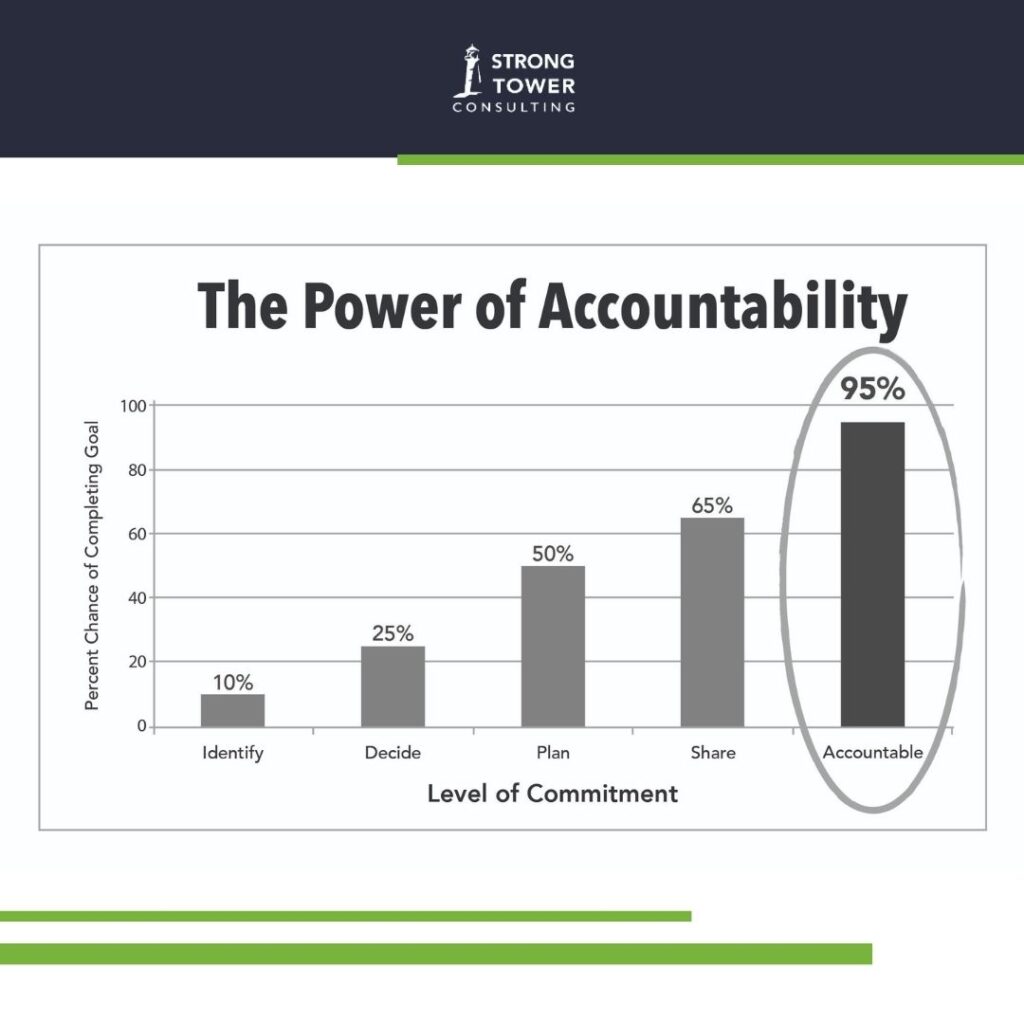
These numbers aren’t a guarantee that accountability will make you successful. But they illustrate an important principle: your chances of following through can change when someone else becomes part of the process.
Once someone else knows what you’re working toward, you aren’t carrying the goal entirely by yourself. And when you’ve scheduled a specific time to check in, your goal becomes something you’re actively working on rather than something you hope to accomplish someday.
That’s a big difference.
You May Already Know What to Do
One of the most frustrating things about money is that you can know exactly what you should do and still struggle to do it. You know you should spend less, save more, avoid unnecessary purchases, and make that extra debt payment.
The problem isn’t always knowledge. It’s follow-through.
That’s why another financial book, another spreadsheet, or another budgeting app isn’t necessarily what you need. Sometimes you need someone who can look at the plan you’ve already made and ask, “How’s it going?” That simple question can make a difference because it gives you a reason to stop, look honestly at what’s happening, and decide what needs to change.
What Good Accountability Looks Like
Of course, not everyone is the right person to hold you accountable. You need someone who understands what you’re trying to accomplish and cares enough to help you stay committed to it.
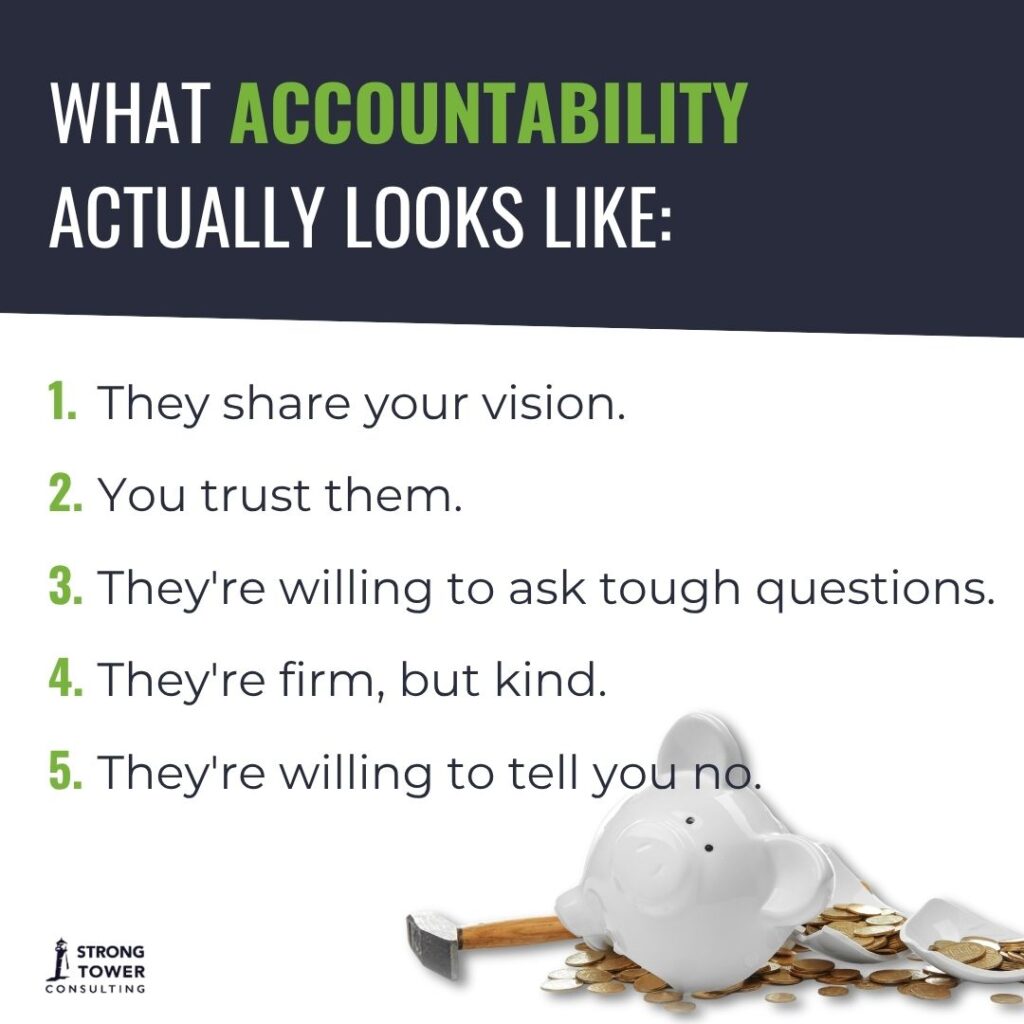
A good accountability partner should have five characteristics.
1. They share your vision.
Your accountability partner doesn’t have to make the exact same financial decisions you do, but they should understand what you’re working toward. If your goal is to get out of debt, you need someone who will support that goal rather than encourage you to take on more debt. You want someone who understands where you’re going and will help you stay pointed in that direction.
2. You trust them.
Accountability only works when you’re willing to be honest. That means telling someone when things are going well, but also telling them when you’ve messed up.
If you spent money you shouldn’t have spent, you need to be able to say so. If you abandoned your budget for three weeks, they need to know. If you’re embarrassed about where you are financially, you need to feel safe enough to be honest about it. Someone can’t help you with something they don’t know about.
3. They’re willing to ask tough questions.
A good accountability partner doesn’t simply tell you that everything is fine. Sometimes they need to ask questions you don’t really want to answer. Why did you make that purchase? Is that decision consistent with the goal you said was important to you? What changed? Are you willing to make a sacrifice now so you can reach the goal you’ve been talking about?
Those questions aren’t meant to shame you. They’re meant to help you pause, think, and remember what you’re working toward.
4. They’re firm, but kind.
Accountability doesn’t mean having someone constantly criticize you. You don’t need a financial drill sergeant. You need someone who cares enough to be honest with you while still treating you with respect.
There will be times when you need encouragement. There will also be times when you need someone to say, “I don’t think that’s a good idea.” Good accountability makes room for both.
5. They’re willing to tell you no.
This may be one of the most valuable parts of accountability. Friends and family members can be wonderful sources of support, but sometimes the people closest to us are also the least likely to challenge us.
If your shopping buddy is always telling you that you deserve the purchase, that probably isn’t the accountability you need. A good accountability partner isn’t afraid to say no when saying yes would move you away from your goal.
Accountability Isn’t About Shame
There’s an important difference between accountability and shame. Shame says, “You messed up. What’s wrong with you?” Accountability says, “You messed up. Let’s figure out what happened and get you moving again.”
That’s why the right accountability partner can be so valuable. They aren’t there to keep a record of your failures. They’re there to help you keep moving toward the goal you chose.
Everyone has weak moments. Everyone makes financial decisions they wish they could take back. The goal isn’t to create a plan so perfect that you’ll never make a mistake. The goal is to have enough support around you that one mistake doesn’t turn into giving up altogether.
A Real Example of Accountability
I’ve seen this play out with clients. One of the couples who stands out most to me is Greg and Lisa. After six months of coaching, they were making great progress: paying off debt, sticking to their budget, and building momentum. Then they came into our January meeting and admitted they had overspent at Christmas, put it on a credit card, booked an all-inclusive Cancun vacation on another credit card, and decided Greg wasn’t going to sell his truck to pay off debt after all. They had plenty of reasons why each decision made sense in the moment.
So I pulled up my notes from our very first meeting. I had asked them how much accountability they wanted from me on a scale of 1–10. They had both said 10. That was the reminder they needed. They hadn’t hired me to tell them everything they were doing was fine. They hired me to challenge them when their decisions were taking them away from their goals. We had an honest conversation about the narrow path to financial freedom and the danger of rationalizing. I challenged them to decide whether they were truly all in.
They chose to continue. And the Cancun vacation became a lesson they never forgot. Lisa later told me she thought about our conversation throughout the entire trip and wished she could undo the decision. They had created a setback, but they didn’t quit. With continued accountability and a renewed commitment to the plan, they eventually paid off all their debt, fully funded their savings, and reached the financial freedom they had been working toward. Accountability didn’t mean I made their decisions for them. It helped them stay honest about whether their decisions were moving them toward the life they said they wanted.
You Don’t Have to Do This Alone
If you’ve been trying to reach a financial goal on your own and haven’t been able to make it stick, don’t automatically assume you need more willpower. Maybe you need someone in your corner.
Start by thinking about the financial goal you’ve been putting off. Who knows about it? If the answer is no one, that’s a good place to start. Find someone you trust, tell them what you’re working toward and why it matters to you, and ask if they’re willing to check in with you regularly. It could be a monthly conversation, a weekly phone call, or even a quick text when you make an extra debt payment or reach a savings goal.
Sometimes, though, you need more than a friend or family member. You need someone who understands the financial decisions you’re trying to make and can help you work through the obstacles that keep getting in the way. That’s where financial coaching can make a difference.
As a financial coach, I don’t just hand you a budget and send you on your way. We work together to understand what’s happening with your money, create a plan that fits your life, and build the accountability that helps you follow through. I’ll celebrate the wins with you, help you work through setbacks, and ask the questions that can be easy to avoid on your own.
You don’t have to have everything figured out before you ask for help. Sometimes having the right person beside you is what helps you finally move forward.
If you’re wondering whether that kind of accountability would be helpful for you, let’s find out. I offer a free coaching session so you can talk through where you are, where you want to go, and see if my approach to accountability is a good fit for you. There’s no obligation to continue. It’s simply an opportunity to have a conversation and see whether working together makes sense.
Keep Moving Forward
Financial progress rarely happens because someone finally discovers the perfect budget. It happens because you make a decision, create a plan, and keep taking the next step. Sometimes that means adjusting the plan. Sometimes it means admitting you made a mistake. And sometimes it means having someone beside you who cares enough to say, “Don’t give up. You can do this.”
Accountability isn’t about shame or perfection. It’s about having someone who helps you stay focused on the goal you already decided matters.
So think about the financial goal you’ve been putting off. Who knows about it? Maybe that’s the missing piece.